
Jump to content

Gursikhi Jeevan of Baba Thakur Singh ji & other Taksal Gursikhs


Buv_Singh
 Share

Recommended Posts

JATHEDAR

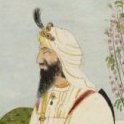
Shaheed Baba Gurbaksh Singh Ji

baba_gurbakhsh_sing.jpg

Bhai Dasaunda Singh and Mata Lachmi ji from the village Leel (near Khemkaran), District Amritsar, came to the live in the company of Sri Guru Gobind Singh Sahib ji and the Sikh Sangats (Congregation). Guru ji commanded them both to take part in the Seva (selfless service) of the house of the Lord with love. Impressed with their selfless service, Guru ji granted their wish and blessed them with a son who would be a saint-soldier, Baba Gurbaksh Singh ji was born in 1688 AD.

At the age of 11, in the year 1699, Baba ji entered the path of Sikhi by taking Khande di Pahul (initiation ceremony of Sikhi, known as taking Amrit). Baba ji was15 years old, when both his parents passed away at Anandpur Sahib. Bhai Mani Singh ji and Baba Deep Singh ji taught Baba ji Gurmat Vidiya (Knowledge), he was also trained in Shastar Vidiya and became members of Baba Deep Singh ji's battalaion.

When Sri Guru Gobind Singh Sahib ji left Anandpur Sahib, He ordered Baba ji to stay there and continue Gurmat Parchar (preaching Sikhi) and manage the Gurdwaras. Upon the Shaheedi (Martyrdom) of Baba Deep Singh ji, Baba Gurbaksh Singh ji was appointed as the next Jathedar (Leader) of Damdami Taksal. Just like Baba Deep Singh ji, Baba ji produced Pothis and Gutke (anthologies) of Gurbani and sent them to places of need.

In 1765 when Ahmed Shah Abdali attacked India for the 10th time, Baba ji was the Jathedar of both Damdami Taksal and Sri Akal Takhat Sahib(Sikh Temporal Throne). After bathing in the holy Sarover (pool of nectar), along with 30 other Sikhs from his battalion, Baba ji offered Karah parsad at Sri Harmandir Sahib (Holiest Sikh Shrine) and at Sri Akal Takhat Sahib and then made the following ardas to Guru Sahib ji: "Satguru ji may my Sikhi last with my kes (hair) intact." After taking Hukam (the command from Guru ji) from Sri Guru Granth Sahib ji and reciting "Ghoriaa(n)" (a prayer abot marriage), the Sikhs stated that they were going to wed death. The Afghan forces of Ahmed Shah Abdali attacked the Sikhs and a vicious war began. Das Hazari Khan and Baba ji were in battle, they simultaneously landed blows upon each other and they were both decapitated.

Baba ji continued fighting without his head, seeing this the enemy were horrified and were quick to retreat. Baba ji continued killing off the tyrants and was relentless in his attacks, a Muslim Saint advised the Afghan army said that the only way to stop Baba ji, who wouldn't retreat, was to beg for forgiveness at the feet of the Sikhs Guru for all the atrocities they caused and promise not to come back again. "Forgive us our misdeeds and evil actions," their General begged. It was only then that Baba ji stopped and laid his body to rest.

Baba ji's cremation took place behind Sri Akal Takhat Sahib according to the rites of the death ceremony of Sikhi. Gurdwara Shaheed Ganj (behind Sri Akhal Takhat Sahib) commemorates Baba ji's Shaheedi. Baba ji is remembered as one of the great Shaheeds of the Panth and will forever be remembered as a true Saint-Soldier.

damdamitaksal.com

Link to comment
Share on other sites

How A Singh Welcomes Shaheedee - Second Jathedhar of the Damdami Taksal

Taken From Pracheen Panth Parkaash by Rattan Singh Bhangoo

Translated by Admin www.tapoban.org 1 paragraph edited by myself

baba_gurbakhsh_sing.jpg

Introduction

Baba Gurbaksh Singh jee was a very well known and respected Singh, who had the honour of being martyred while defending Sree Darbaar Sahib.

Baba jee was of village Leel near Sree Amritsar. His Father was Bhai Dasaundha Singh jee and mother Mata Lachmee Kaur jee. Baba jee's parents served Satguru Gobind Singh jee and Baba jee received amrit at the age of 11, due to the inspiration of Bhai Manee Singh jee. He spent time with Baba Deep Singh jee and Bhai Manee Singh jee and became a very good scholar and warrior.

About Baba Jee

Baba Gurbaksh Singh was always dressed in blue baaNaa and kept a very strong rehit. He would awake at amrit vela and do ishnaan. Then, while reciting baaNee, Baba jee would tie his dumalla. Baba jee loved Sarbloh. He would offer his respect to his sarbloh shastars i.e. kirpans, chakars, toRaas (metal cable tied around dastaar), kaRas, etc and then put them on. He would finally put on a mala of sarbloh around his neck and also many sarbloh kaRas and simarnaas. Baba jee's dastaar had many sarbloh toRaas tied into it. He would also wear a sarbloh armour.

Other features Panth Parkash mentions about the way Baba jee looked was that he wore a very long 1.5 yard kacherra and always kept a long stick with him.

Every amrit vela then, after dressing himself in his baaNaa, Baba jee sat in the divaan at Sree Akaal Takhat Sahib. It did not matter who came to meet him, whether a powerful Sardar or a lowly peasant, he greeted all people in the same way and with the same respect. He had absolutely no worldly aspirations or greed.

Whenever there was a battle, Baba jee would always go and confront the enemy. He would take the Nishaan Sahib himself and advance. With the beat of the nagara, Baba jee used to be in the forefront to confront the enemy.

Abdali's Oppression and the Khalsa Scatters

The Khalsa had scattered when Ahmed Shah Abdali brought his army through the Punjab. Some Singhs went to the mountains where they were looted by the mountain-people; others went and hid around the rivers where they were not only looted but also attacked by lions and other animals. Those Singhs who decided to stay in Majha and not retreat were turned over to the Afghans by traitors and informers. In Malwa, the Singhs also fared no better and had to go from house to house like beggars.

At Sree Amritsar, the Sarbat Khalsa gathered one day and after the night divaan, decided to abandon Sree Amritsar and leave together as a group for Malwa.

Baba Jee Offers His Shaheedee

After the decision had been made, Baba Gurbaksh Singh rose and addressed the Singhs. Baba jee said, "Is there any Singh in the Panth today, who would fight with the Afghans and sacrifice his head and then go to Dargah and with his sacrifice have Karta-Purakh listen to his request and ensure the Chardi Kala of the Panth? One who could do ardaas to Karta-Purakh and bring an end to these dark days? Is there any Singh who is so determined and is such a devotee of naam and one who is so strong in rehit? Is there anyone who will give his life for the rest of the Khalsa and with his sacrifice be able to wipe out the enemy?" [it is said that when the enemy kills a bhagat of Vahiguru, the bad karma of committing such an act results in the enemy also being wiped out. Baba jee was asking if there was such a bhagat in the Panth who could give such a sacrifice and destroy the Afghans].

The Singhs listened to Baba Gurbaksh Singh and replied, "Baba jee, is there any Singh better for this than you? There is no one with more kamaiee. No one else has the power to abandon their body and go to Dargah like you do. No one else's request will be more acceptable to Vahiguru than yours."

Baba jee listened to these words and then bowed his head and agreed to the request.

Baba jee Prepares His Wedding Party

Baba jee then called out, "I want to be Shaheed! If there is any other Gurmukh who wishes to come with me to Dargah, then let them also come. When there is a marriage, the groom goes with his Sarbaalha (best man) and with a large baraat (marriage party). I am going to marry the bride of Death. Are there Singhs who would be my Sarbaalhas?"

Hearing Baba jee's call, many Singhs rose and stood with Baba jee. They said, "We were waiting for your call. With your permission we will be your Sarbaalhas."

Seeing these Singhs stand, many more Singhs also rose and said "then we all will come with you in the baraat!"

Baba jee then adressed all the Singhs and said, "Khalsa jee! You have all agreed to join my wedding party. We will give our heads in this Dharam Yudh and in this way we will be married. We will get Shaheedee and Guru Sahib will give us all Kingships. No, even bigger rewards than kingships. That Singh who gives his head in battle will be the King of Kings. "

The Singhs Prepare for The "Wedding"

By this time, Ahmed Shah Abdali had arrived in Lahore. He was preparing to go to Delhi when he heard about the gathering of the Khalsa at Sree Amritsar. He decided that on the way to Delhi, he would stop at Sree Amritsar and slaughter all the Sikhs.

Hearing of the advance of Abdali, some of the cowards who had remained at Sree Amritsar with Baba jee ran away. Baba jee also encouraged them to leave and said "Go! Leave now, otherwise we won't let you leave later!"

Only about 30 Singhs now remained. The remaining Singhs were all chardee kala naam abhyaasee Gursikhs. They prepared for their death like a groom prepares for his wedding. They all had new cholas sewn. Some decided to sew blue, and others wore white and others kesree. They gathered in front of Sree Akaal Takhat Sahib and eagerly awaited the enemy. They would stand on their toes to see if the enemy was yet visible on the horizon. They were discussing how they would give their Shaheedees and then in Dargah would stop the Afghan attacks forever.

The following day, the Singhs all rose at amrit vela. They began to prepare like it was their wedding day. They sprinkled themselves with attar and rose scents, and rubbed sandal past on their bodies. As they did this, they sang "GhoReeaa(n)" shabads from Sree Guru Granth Sahib. They then bathed in Sree Amritsar Sahib and then gathered at Sree Akaal Takhat.

Baba jee was looking very impressive in his new dress. He was wearing a blue chola over his new kacherra and was wearing a very tight dumalla, which was tied especially for battle. The dumalla had many chakars and kirpaans tied into it. The Singhs then gathered and offered obeisance to Sree Guru Granth Sahib. After reading 5 pauRees of Anand Sahib and doing ardaas, the Singhs distributed Degh and then as a group left for darshan of Sree Darbaar Sahib.

The group of Singhs was led by a Nishaan Sahib and nagaaras were beating. Baba jee asked the Singhs to sing shabads of happiness as this was their wedding day and the wedding party was now moving. Baba jee and the other Singhs also gave away all the money they had to the needy. They arrived at Sree Darbaar Sahib and did parkarma. Once inside, they showered Sree Guru Granth Sahib with flowers and then did Ardaas. Baba jee standing before Satguru Granth Sahib spoke the following words, "True Emperor, protector of the poor! Your Khalsa is going now to marry the bride of Death. We are going to battle the Dushts. Satguru jee! May our Sikhee and our kesh stay intact through our final breaths."

The Afghans in the meantime had began to move towards Sree Amritsar. They had prepared for a massive battle and brought a large army. They were wearing armour and metal helmets. They had decided to do battle in such a way that the Singhs would be killed but they themselves would incur minimal casualties. They had brought long weapons which could kill from a distance such as large guns.

Baba jee, after offering ardaas at Sree Darbaar Sahib, returned with the Singhs to Sree Akaal Takhat Sahib to listen to keertan and await the enemy. The keertanees began to recite keertan and the Singhs would ask that certain shabads they wanted to hear be sung. The GhoReeaa(n) shabads were again recited. In this way, the entire night passed in listening to keertan. At day break, the enemy had arrived.

The Afghans Arrive & The Battle Begins

The Singhs upon seeing the Afghan army came down from Sree Akaal Takhat Sahib. They bowed to their shastars (kirpaans, kataars and talwaars) and then grabbed them. Some Singhs grabbed very big sticks and others mounted horses. The Singhs vied to go ahead of each other and kept moving forward. They Singhs argued about who had the right to attain Shaheedee first. The Nishaan Sahibs were furling and the beat of nagaaraas was echoing. The Singhs were like grooms anxious to marry a beautiful wife and seeing the time come closer, becoming more and more excited.

Some Singhs then ran forward and began the battle. The Singhs would sprint forward and began to embrace Shaheedee and complete their weddings with death. The Singhs were surrounded on all four sides and the Afghans began to close in. Baba jee called out to all the Singhs, "Singhs! Step forward and embrace martyrdom! If we step forward, our honour remains intact, if we step back, they will say we are retreating! Do not look for assistance anymore, just go forward! Now go forward and give your heads!"

Hearing Baba jee's cry, the Singhs all charged forward. They fell upon the Afghans like a lion on deer. The Singhs were all eager to become Shaheed as quickly as possible. They had no hope for life.

Baba jee again called out, "Khalsa jee! Become Shaheed and cross this world-ocean! Let us go to the court of Satguru jee and ask that the Afghans never attack here again and that the Khalsa should rule! What is the delay now? Fall upon the enemy!"

The Afghans Fall Back & Reinforcements

Wherever the Singhs stood their ground against the Afghans, they eventually fell. Afghan reinforcements also arrived. Not one Singh stepped back. Some Afghans even began to run away. Seeing this, Baba jee bellowed, "Don't let them go Khalsa jee! Stand and fight this Dharam Yudh!"

The Afghans did not understand what Baba jee was saying and were surprised to the see the Singhs run after them. They then trained their guns upon the Singhs. Many Singhs standing with Baba jee fell to the rain of bullets. Baba jee then took out his heavy Tegha and ran towards the enemy. He swung his Tegha with such force that it cut through the armour of the Afghans. Baba jee would aim for the face and neck where there was less armour. The Afghans all then began to cover their faces with their shields.

The Singhs seeing the cowardice of the Afghans threw aside their own shields and challenged, "look! We've thrown aside our shields, do you have the bravery to do the same? We'll take your blows without any shield, will you take ours?"

The Singhs continued to run forward and did not show any fear of death. They did not so much as look backwards. The Afghans continued to fall back and began to wonder why such a small group was not finishing and whether these few Singhs would cause their defeat. They could not bear the brunt of the Singhs' sword blows. They fell back and began to fire bullets and arrows.

Baba Jee's Shaheedee

Baba jee's body was pierced by many bullets and arrows and his wounds could not be counted. Some cut through his skin and others broke bones. But neither did the Singhs accept defeat nor would they acknowledge any pain. Baba jee's body was pouring blood like a spring. But Baba jee kept moving forward. He was soaked in blood like he had just been playing Holi with colours. Eventually because of loss of blood, Baba jee became very weak. He could not walk anymore and became very tired. But with every ounce of strength in his being, he put on foot ahead of the other. He was careful that no one would say he retreated.

Baba jee called to the remaining Singhs, "Singhs! Do not shame the BaaNaa we wear! May our Shaheedees be perfect and may we fall in the battlefield!"

By this time, even more Afghan reinforcements arrived. The new Afghans surrounded the wounded Baba jee and pierced him with their long spears. Baba jee with great effort used his khanda to cut off the spears and the Afghans again fell back. Baba jee would not look back but the enemy had surrounded him and knocked him to the ground from behind with a blow from a spear. Baba jee fell to his knees. Baba jee thought in his mind, "I cannot let go of my khanda. If I let it go, the enemy may consider me helpless and not attack. I will not be able to become Shaheed and my wish will not be fulfilled. If I do not take care of this moment, who knows if I ever get the opportunity for Shaheedee again?"

edited. . .taksals ithaas is different to what was stated here. . .as per katha by previous jathedars

The Aftermath

Night fell and the Afghans were in shock after seeing such a bloody battle. They set up camp near the Bhangi fort and fell into a deep sleep. The few Singhs that had remained hidden in the area though rose at night and attacked the camp. The Singhs stole horses and began to slaughter the exhausted Afghans. The remaining Afghans could not sleep in peace and at day break, they quickly fled from the area.

The same night, a few other Singhs came to the scene of the battle to see what had happened. They saw the headless bodies of the Singhs and many many Afghans. The Singhs decided to make one big pyre and cremate all the bodies together. Behind Sree Akaal Takhat Sahib, a lot of wood was gathered and all the bodies were cremated together. Degh was distributed and the Singhs celebrated as though a great wedding had taken place. The Shaheed Ganj of Baba Gurbaksh Singh still stands at that place.

Baba jee's Shaheedee was glorious and indeed, the Afghan power did begin to fall after this point. Within a few years, the Sikhs began to rule Punjab and the Sikh Kingdoms were established. In today's dark period, where again the Sikhs are powerless and attacked from all sides, do we still have Shaheeds who can give their sacrifice and return power to the Khalsa?

Link to comment
Share on other sites

Join the conversation

You can post now and register later. If you have an account, sign in now to post with your account.

Guest
Reply to this topic...

×   Pasted as rich text.   Paste as plain text instead

  Only 75 emoji are allowed.

×   Your link has been automatically embedded.   Display as a link instead

×   Your previous content has been restored.   Clear editor

×   You cannot paste images directly. Upload or insert images from URL.

Loading...
 Share


  • advertisement_alt
  • advertisement_alt
  • advertisement_alt


  • Topics

  • Posts

    • WJKK WJKF Sangat Ji, I bought a brand new medium Artisan Kirpan (8.7 inches) from https://thekhalsaraj.com/products/black-g10-ultra-durable-kirpans 2 months ago, and it is in unused condition. I bought it 2 months ago and it is in unused condition, with everything that came with it still fully sealed. I even paid extra to get it ੴ ਸਤਿ ਗੁਰ ਪ੍ਰਸਾਦਿ  laser engraved on the blade. This cost me £370 including shipping from the USA. It is in brand new condition, but I no longer need it since I have been gifted a new Buddha Dal-made Pesh Kabz for free. I am selling it for £250 even though it is in brand new condition - it is a first-hand Kirpan. From the official website, it costs £370. The handle is indestructable G10 fiberglass, wielded to a razor sharp blade (edge and tip) which is engraved with the custom Gurbani. Please reply if any Singh/Kaur here would like to buy it - it's 100% first hand but £120 reduced price. Includes a an embroidered padded case for airport travel, a blank certificate of ownership, maintenance brochure and a beautifully decorated black/grey adjustable Gatra.   I sent this advert out to a few places, and also asked some retailers if they'd like it, so it may go soon. Please do reply if anybody is interested, more than happy to answer questions too! (Note: the pic is from Google but is exactly what the Kirpan and Gatra both look like - the one I have is still in the packaging).    
    • WJKK WJKF Sangat Ji, I bought a brand new Artisan Kirpan (pic below) from https://thekhalsaraj.com/products/black-g10-ultra-durable-kirpans. It is the medium option (8.7 inches). I bought it 2 months ago and it is in unused condition, with everything that came with it still fully sealed. I even paid extra to get it ੴ ਸਤਿ ਗੁਰ ਪ੍ਰਸਾਦਿ  laser engraved on the blade. This cost me £370 including shipping from the USA. It is in brand new condition, but I no longer need it since I have been gifted a new Buddha Dal-made Pesh Kabz for free. I am selling it for £250 even though it is in brand new condition - it is a first-hand Kirpan. From the official website, it costs £370. The handle is indestructable G10 fiberglass, wielded to a razor sharp blade (edge and tip) which is engraved with the custom Gurbani. Please reply if any Singh/Kaur here would like to buy it - it's 100% first hand but £120 less than normal. Comes with a padded foam case for airport travel, a blank certificate of ownership, maintenance brochure and a beautifully decorated black/grey adjustable Gatra.   I sent this advert out to a few places, and also asked some retailers if they'd like it, so it may go soon. Please do reply if anybody is interested, more than happy to answer questions too! (below's a pic of the exact model, but not the Kirpan I have, as it's still in its box. I've only unsheathed it once to inspect it, and I can confirm it's in perfect condition).        
    • WJKK WJKF! How long will this forum remain online for in a readable & accessible state? It appears susceptible to shut-down. It would be a shame if all the forum's content from over the decades is lost in such an event due to servers hosting this forum shutting-down. This forum, whilst not currently active, remains an important repository of the Sikh religion online. It also is a fundamental aspect of Sikh cyber culture that existed from the early Internet period from the 2000's to 2010's before the domination by big social-media sites that consolidated the community. Thus, have the web-masters of this forum considered archiving this forum's contents before it is lost forever? I can assist you in this by saving the content to the Internet Archive on your behalf. Please let me know your thoughts about such an endeavour and I hope you may consider the possibility of archiving the forum for posterity. Future generations of Sikhs and Sikh researchers will be grateful. Kind regards, Theth Panjabi (you can find me on IG at theth.panjabi and on X/Twitter at ThethPanjabi)
    • Video on the tale, gurdwara, and manuscript: link As the story goes, during the Vadda Ghallughara genocide against the Sikhs perpetrated by the Afghan Durrani Empire on 5–6 February 1762, not only were Sikh lives lost, but our original Damdami Sahib Bir recension was also lost in that carnage. However, over the years I have spent researching our history, many claimed it was taken back to Afghanistan by Ahmad Shah Abdali's troops as loot whilst others said it was secretly hidden somewhere by the Singhs for safe-keeping. As of today, it remains untraceable and I presume it is gone for good. However, I came across a couple of articles stating that there were actually around five master-copies of the original Damdami Bir, with one of these copies being safeguarded by the jatha of Bhai Sudha Singh of the Shaheedan Misl. "It is said that the tenth Sikh master Guru Gobind Singh had got five birs written at Damdama Sahib. The bani (writings) of the ninth Sikh master Guru Tegh Bahadur were incorporated in these birs. These five birs were given to different jathas (groups) of Sikhs by Guru Gobind Singh to be safely installed. One bir was being taken by Sudha Singh who was leading a jatha of 19 Sikhs, when Abdali'[s] forces stormed Kup-Rohira and killed thousands of Sikhs. Though all 19 Sikhs were massacred by Abdali, Sudha Singh somehow brought the bir to Kuthala. Since then it has been kept at village gurdwara." (Times of India, 2012) The gurdwara today [Gurdwara Shaheed Baba Sudha Singh Ji in Kuthala] has a certain historical manuscript that they claim is one of the five master-copies of the Damdama recension. You can see close-up shots of the bir in the video posted. I will also share close-up images of its folios in the comment section. I will also provide a faithful English translation of the video's narration so non-Punjabi speakers may benefit from this post. I will leave the question on whether this bir is authentic or not to your judgement but I will provide my own analysis below.   English translation of the video's narration: The Guru-form Guru Khalsa Holy Congregation (Sadh Sangat) Ji, Waheguru Ji Ka Khalsa, Waheguru Ji Ki Fateh. The Gurdwara Sahib that the congregation is currently beholding is situated in Village Kuthala, near Malerkotla, in the Sangrur district of Punjab. A very great treasure is preserved within this Gurdwara Sahib. The history of this Gurdwara Sahib is very closely related to the Vada Ghalughara (The Great Holocaust) that took place in February 1762. Baba Sudha Singh Ji, the third head of the Shaheedi Misl, arrived at this location considering it a safe place. He brought with him that sacred holy scripture (Saroop) which the Tenth Father, Sri Guru Gobind Singh Ji, had personally dictated to Bhai Mani Singh Ji on the holy land of Damdama Sahib. Upon arriving, he personally performed the last rites (cremation) of 19 martyred Sikhs at this site. As he prepared to leave to take command of the Jatha (the Sikh contingent), the sacred holy scripture he had brought was enshrined at this very location. At that time, this place was known as Dera Jaga Sidh, but nowadays, a very beautiful building stands here in the name of Gurdwara Sahib Shaheedi. The sacred holy scriptures that were enshrined at that time are today ceremoniously displayed (Prakashwan) with great respect every Channi Dashmi (the tenth day of the bright lunar fortnight) for the congregation to behold. Devotees from within the country and abroad arrive to catch a glimpse of these sacred scriptures and receive the Guru's blessings. Every year, an annual Gurmat Samagam (religious congregation) is held for five consecutive days in memory of the martyrs of the Great Holocaust, concluding on Magh Sudi Dashmi. Furthermore, a book containing the full detailed history—titled after Shaheed Baba Sudha Singh Ji and the Hand-written Holy Sri Guru Granth Sahib Ji—was released in February 2013 by the managing volunteers based on historical research. It was released by the 14th head of the Shaheedi Misl, Singh Sahib Baba Makhan Singh Ji (the current head of Baba Bakala Sahib), the Meet Jathedar Singh Ji, and Sant Gurdev Singh Ji of Anandpur Sahib (the current head). The congregation can obtain spiritual benefit by reading it. Waheguru Ji Ka Khalsa, Waheguru Ji Ki Fateh.   My analysis: In my humble opinion (which may be incorrect), this bir is not a master-copy of the Damdami Bir. It more closely resembles the highly-decorated birs of the Kashmiri-style that were created during the reign of the Sikh Empire in the first half of the 19th century. We can see this bir has highly illuminated and illustrated angs (folios), which took the great skill of a master artisan to make, which required resources to pay and patronize. Usually, the manuscripts during the Sikh Empire were the most elaborately decorated, as this was when the Sikhs were at a high-point, masters of the land, possessing vast amounts of resources that they could use to fund such endeavors. Therefore, whilst the story may be true and a master-copy of the Damdami Bir recension may have once been at this location, I am not convinced that this particular manuscript is it. I may be mistaken and I am open to constructive criticism. 1633648456_GurdwaraHistory.mp4
×
×
  • Create New...

Important Information

Terms of Use